
 A lot of men come into recovery with the same question sitting behind their eyes: “Why did quitting feel doable the first time, but now it feels like my body is trying to kill me?”
They are not being dramatic. They are noticing something real.
If you have been through more than one detox, relapse, or “I’m done for good” moment, it can start to feel like each round gets more intense. Sleep gets worse. Anxiety gets sharper. Irritability turns into rage. Shakes show up faster. Your mind starts sprinting at 2 a.m., and you cannot turn it off.
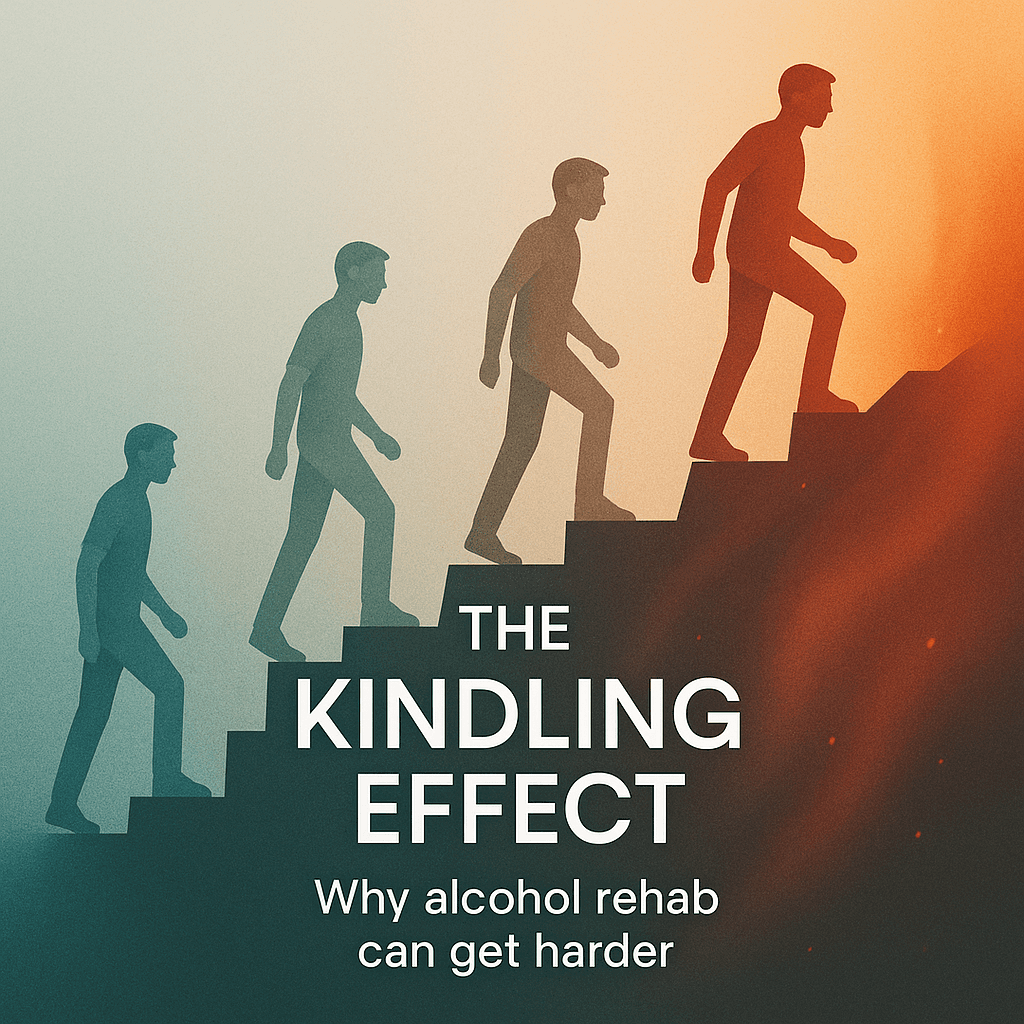
That pattern has a name. It is called the kindling effect, and it helps explain why repeated attempts to stop drinking can become medically riskier and emotionally harder, especially for men who have been cycling between heavy use, short breaks, and then heavy use again. This phenomenon is particularly relevant considering are men more prone to addiction, which could explain some of these challenges.
This is not about willpower. It is about what repeated alcohol withdrawal can do to the brain and nervous system, a topic extensively covered in the basics of alcohol addiction.
What “kindling” means in alcohol withdrawal
The simplest way to think about kindling is this:
Each withdrawal can “teach” the brain to become more reactive the next time.
The term comes from epilepsy research. Small, repeated刺激 (not enough to cause a big event at first) can eventually make the brain more seizure-prone. With alcohol, repeated withdrawals can do something similar: they can increase the likelihood of severe withdrawal symptoms over time, including seizures and delirium tremens (DTs). This ties into the broader effects of alcohol abuse, which are not limited to physical health but also encompass mental health aspects.
Not everyone experiences kindling the same way. But for many men who binge, stop, relapse, stop again, and repeat—often due to how alcohol affects the brain—the withdrawal response can become progressively more intense.
That is why “I’ll just taper at home this weekend” can go from uncomfortable to dangerous faster than a lot of guys expect. It’s important to understand that this isn’t just about the difference between alcohol abuse and alcoholism; it’s about understanding the severity of addiction itself and its implications on one’s life.
Why it can feel worse each time you quit
To understand why, it helps to know what alcohol is doing to your brain while you are drinking. Alcohol is a depressant, It slows things down. Over time, the brain tries to balance that by adapting:
- It reduces calming signals (primarily the GABA system).
- It increases activating signals (primarily glutamate and stress-related systems).
So when alcohol is suddenly removed, your brain is left with the gas pedal stuck down and the brakes worn out.
That is withdrawal.
Now here is where kindling comes in. With repeated withdrawals, those adaptations can become more entrenched and the nervous system can get more “sensitized.” The rebound effect can hit harder and faster.
That is why a guy who used to be able to stop for a week and “just feel cranky” might later experience:
- Panic-level anxiety
- Extreme insomnia
- Heart pounding, sweating, tremors
- A sense of crawling out of his own skin
- Confusion, paranoia, hallucinations in severe cases
The body remembers.
The cycle that drives kindling (and why men get stuck in it)
A common pattern looks like this:
- Heavy drinking builds up again, often quietly.
- A breaking point hits: family conflict, work issue, health scare, shame.
- You stop abruptly.
- Withdrawal symptoms spike.
- You drink again to shut the symptoms down.
- You promise yourself it will be different next time.
That “drink again to feel normal” step is where men get trapped. Not because they are weak, but because withdrawal is painful, and alcohol temporarily fixes the pain that alcohol created.
Men also tend to carry certain pressures that make the cycle more likely to repeat:
- A belief that you should be able to “handle it”
- Pride around not needing help
- Work responsibilities that make taking time off feel impossible
- Using alcohol as a tool to manage anger, stress, loneliness, or old injuries you never dealt with
If you are white-knuckling it alone, cycling through detox attempts like this alcohol detox program in Utah, and then returning to alcohol, you are not just “starting over.” You may be intensifying the next withdrawal.
If you are in that spot right now, it is worth talking with our team at Spirit Mountain Recovery about what a medically supported, structured rehab plan could look like such as our drug rehab treatment or alcohol detox programs. Even one honest conversation can help you stop guessing and start making safer decisions.
What kindling can look like in real life
Kindling is not always dramatic. Sometimes it shows up as small changes that you write off as “getting older” or “work stress.”
Here are a few common signs men report as withdrawal escalates over time, which could indicate a deeper issue such as addiction or the need for professional help like rehab:
1) Symptoms hit sooner
You drink heavily for fewer days before withdrawal appears. Or you wake up shaky after a night that used to feel “normal.”
2) Sleep becomes the first thing to break
You may fall asleep, but you cannot stay asleep. Or you wake at 3 a.m. with dread and adrenaline. After repeated withdrawals, insomnia can get stubborn.
3) Anxiety feels less situational and more chemical
It stops feeling like worry about real problems and starts feeling like raw panic, agitation, and dread for no clear reason.
4) Irritability turns into aggression or shutdown
A lot of men describe becoming short-tempered, harsh, or emotionally numb when they try to quit again. That does not mean you are a bad person. It often means your nervous system is on fire.
5) Tremors, sweating, heart pounding
Autonomic symptoms can become more pronounced with repeated withdrawal cycles.
6) Greater risk of severe withdrawal complications
This is the part that deserves respect. Withdrawal can be medically dangerous. Seizures and DTs are not rare stories from movies. They are real risks, especially for people with a history of heavy use and repeated detox attempts.
Understanding these stages of withdrawal can provide valuable insight into what one might experience during this challenging time.
Why “just taper” is not always the safer option
Some men try to taper on their own to avoid withdrawal. Sometimes that works. Often it does not, for a simple reason:
Tapering requires consistent control in the exact window when your brain is least able to control cravings, anxiety, and impulsivity.
If you have tried tapering multiple times and it turns into another bender, that is not a character flaw. It is a predictable outcome of how alcohol affects decision-making and stress circuits.
A safer plan usually involves professional support, medical monitoring when needed, and a step-by-step approach that does not rely on willpower alone. For instance, Spirit Mountain Recovery can help you sort through the options and figure out what a realistic starting line looks like, without judgment and without pressure.
The hidden factor: stress makes kindling worse
One reason men feel blindsided by “why this time is worse” is because withdrawal severity is not only about how much you drank. It is also about what else is happening in your system.
High stress, poor sleep, dehydration, malnutrition, and stimulant use (including heavy caffeine or other substances) can all amplify symptoms.
Men often push through stress until they crash. Then they try to quit at the exact moment their body is already depleted. That can make the withdrawal experience feel brutal.
This is also why a solid rehab plan is not just “stop drinking.” It is:
- Sleep stabilization
- Nervous system regulation
- Nutrition and hydration
- Mental health support
- A real plan for cravings and triggers
- Accountability that does not rely on shame
These components are often part of a comprehensive rehab plan, which may include various forms of outpatient rehab depending on individual needs.
Why relapse prevention matters more after multiple withdrawals
A lot of rehab planning focuses on getting you through detox, which is indeed a crucial part of the recovery journey. However, the reality of how long does it take to detox from alcohol makes what happens next even more important due to the phenomenon known as kindling.
If repeated withdrawals sensitize the brain, then repeated relapses do not just restart the problem. They can raise the stakes. This is especially true when considering how long to get addicted alcohol, which can vary significantly from person to person.
That is why the core question becomes:
How do we reduce the likelihood of another withdrawal cycle?
Relapse prevention is not just about motivational posters. It involves skill-building and structure, including:
- Identifying your highest-risk moments (after work, weekends, isolation, conflict)
- Building coping skills that actually fit a male nervous system under stress
- Learning how to ride out cravings without “arguing” with them
- Rebuilding connection and routine
- Addressing trauma, grief, depression, anxiety, or anger that alcohol was masking
- Setting boundaries with people, places, and patterns that keep pulling you back
If you have done rehab before and it did not “stick,” that does not mean rehab is pointless. It often means the plan did not match your real relapse drivers, or you did not have enough support for long enough.
The hard truth: “I can’t go through withdrawal again” is a warning sign
Some men keep drinking partly because they are scared of detox. They have tried quitting, felt the shakes, the panic, the sleepless nights associated with alcohol addiction, and they think:
“I’d rather keep drinking than go through that again.”
If that is you, take it seriously. That fear can be a signal that your body has already learned the withdrawal pattern.
There is no trophy for suffering in silence. The goal is to stop the cycle safely and build a life where alcohol is not your only off-switch.
In this journey towards recovery after experiencing multiple withdrawals, maintaining a structured routine during rehab can significantly aid in your recovery process. It’s essential to understand recovery after hours and implement strategies that will help you maintain your routine while undergoing rehabilitation.
What to do if you think kindling is happening to you
You do not need to self-diagnose. You do need to act with respect for what your nervous system is telling you.
Here is a grounded way to think about next steps:
1) Stop treating detox as a weekend project
If you have a history of heavy drinking, repeated withdrawals, or severe symptoms, detoxing alone can be dangerous.
2) Get an honest assessment
Be real about how much you drink, how long it has been going on, and what happens when you stop. If you minimize it, you will get a plan that is too small for the problem.
3) Plan for what happens after the first week
A lot of men can muscle through a few days. The drop-off comes later, when sleep is still shaky, mood is low, and life stress returns. Your plan needs to cover that.
4) Build a support system you will actually use
Not the one that sounds good on paper. The one you will call when you are white-knuckling at 9 p.m. and your brain is bargaining.
If you want help building that plan, Spirit Mountain Recovery is here. We can talk through your history, what you have tried, what worked briefly, what failed consistently, and what needs to change so you are not forced into another round of withdrawal.
Why men’s rehab has to address identity, not just drinking
Men often drink for reasons they do not say out loud:
- To shut off self-criticism
- To numb loneliness
- To quiet anger or fear
- To avoid feeling like a failure
- To manage social pressure or performance pressure
- To sleep
- To feel confident, even for an hour
When alcohol becomes the tool, sobriety can feel like losing your only coping skill.
A good men’s rehab experience helps you replace that tool with something stronger. That can include:
- Learning how to regulate stress without going numb
- Rebuilding discipline in a way that is not self-punishment
- Practicing communication that does not explode or shut down
- Developing routines that stabilize mood and cravings
- Creating a life that you do not need to escape from
That is also how you reduce relapse risk, which matters even more when kindling is in the picture.
To effectively tackle these issues, it’s crucial to recognize the risk factors of addiction for men, which often intertwine with aspects of their identity. This understanding can significantly enhance the effectiveness of rehab for men, making it more than just a treatment for drinking but a comprehensive approach addressing underlying issues.
Moreover, considering options like wilderness therapy could provide unique benefits by immersing individuals in nature while facilitating recovery. For those dealing with dual diagnoses alongside addiction, seeking out specialized programs such as dual diagnosis rehab for men could be particularly beneficial.
Ultimately, the goal is to create a sustainable lifestyle where alcohol no longer serves as
A note on safety (because it matters)
Alcohol withdrawal can be medically serious. If you or someone you love is having severe symptoms such as confusion, hallucinations, seizures, or chest pain, it’s crucial to seek immediate medical help.
Even if you’re not at that crisis point, it’s still important to address these issues early. The phenomenon known as kindling is a reality where waiting rarely makes it easier.
The opportunity hiding inside this
If you’ve tried to quit before and it keeps getting harder, it’s easy to interpret that as a personal failure. However, a better interpretation is this: your body is giving you data.
The data says: the old way is no longer safe or sustainable. This realization can be a turning point. Not because you suddenly feel brave, but because you decide to stop gambling with your nervous system and start treating recovery like the serious, worthwhile project it is.
If you’re ready to talk through next steps and make sense of what is happening, reach out to Spirit Mountain Recovery. They will assist you in choosing a level of care that fits your needs and building a plan that does not rely on pain as your teacher. It’s also important to understand that chronic pain and alcohol abuse often go hand-in-hand, and addressing one can significantly help with the other.
FAQs (Frequently Asked Questions)
What is the kindling effect in alcohol withdrawal and why does quitting feel harder each time?
The kindling effect refers to how repeated alcohol withdrawals can make the brain more reactive over time, leading to increasingly intense withdrawal symptoms such as severe anxiety, insomnia, tremors, and even seizures. Each time you quit drinking, your nervous system becomes more sensitized, making subsequent attempts medically riskier and emotionally harder.
Why do men often experience more severe withdrawal symptoms with repeated detox attempts?
Men who cycle between heavy drinking, short breaks, and relapse may experience kindling due to repeated alcohol withdrawals. Biological factors combined with social pressures—like the belief that they should handle it alone or use alcohol to manage stress—can intensify withdrawal symptoms and complicate recovery efforts.
How does alcohol affect the brain during prolonged use and withdrawal?
Alcohol acts as a depressant by slowing brain activity. Over time, the brain adapts by reducing calming neurotransmitters like GABA and increasing activating signals such as glutamate. When alcohol is removed suddenly, this imbalance causes withdrawal symptoms—like anxiety, insomnia, and tremors—that can worsen with repeated detox attempts due to kindling.
What is the typical cycle that leads to repeated relapses in alcohol addiction?
A common cycle includes heavy drinking buildup, a breaking point (such as family or health issues), abrupt quitting leading to intense withdrawal symptoms, drinking again to relieve those symptoms, and promising to quit for good next time. This cycle traps many men because alcohol temporarily alleviates the painful effects caused by its own withdrawal.
Why is willpower not enough to overcome repeated alcohol withdrawals?
Repeated withdrawals cause physiological changes in the brain and nervous system that increase sensitivity and severity of symptoms. This means overcoming addiction isn’t just about willpower; it requires medical support and structured treatment to safely manage withdrawal and prevent dangerous complications like seizures or delirium tremens.
How can seeking professional help improve safety during alcohol detox and recovery?
Medically supported detox programs provide monitoring and interventions that reduce risks associated with severe withdrawal symptoms intensified by kindling. Structured rehab plans address both physical dependence and underlying psychological factors, offering a safer path to recovery than attempting unassisted quitting at home.