Military culture affects addiction in male veterans by normalizing heavy drinking, rewarding toughness over vulnerability, and discouraging help-seeking. When service ends, the structure, purpose, and brotherhood that held men together often disappear, too. As a result, many male veterans use alcohol or drugs to manage trauma, pain, and isolation.
For many men, the military was the first place they truly belonged. It gave them a mission, a code, and a band of brothers who had their backs. However, that same culture can also teach men to drink hard, hide pain, and handle everything alone. Consequently, those lessons often stay with them long after the uniform comes off.
At Spirit Mountain Recovery, we work with men every day who are carrying this weight. In this guide, we explain how military culture shapes substance use, why male veterans often wait so long to get help, and what effective, men-only treatment looks like in Utah.
Why Are Male Veterans at Higher Risk for Addiction?
Substance use problems are common among men who have served. In fact, according to the National Institute on Drug Abuse (NIDA), more than one in 10 veterans who seek care at the VA meet the criteria for a substance use disorder. Moreover, NIDA notes that men with multiple deployments, combat exposure, and combat-related injuries face the greatest risk.
Age matters, too. For example, a review published in Substance Abuse and Rehabilitation found that young male veterans aged 18 to 25 had higher rates of substance abuse than civilian men the same age. Similarly, NIDA’s DrugFacts on substance use and military life reports that veterans are more likely than non-veterans to drink and to drink heavily. In addition, 65% of veterans who enter treatment name alcohol as the substance they misuse most, which is almost double the rate of the general population.
Still, numbers only tell part of the story. To understand why male veterans struggle, we have to look closely at the culture that shaped them.
How Does Military Culture Shape Drinking Habits in Male Veterans?
Alcohol has long been part of military life. It shows up at promotions, homecomings, holidays, and nearly every unit celebration. As a result, many young men learn early that drinking is simply what service members do.
Is “Work Hard, Play Hard” Part of the Problem?
In many units, the unwritten rule is to push through brutal days and then blow off steam just as hard at night. Because the pressure is intense, heavy drinking can feel earned rather than risky. Over time, however, the body and brain adapt. Eventually, what started as a weekend release can become the only way a man knows how to come down.
How Does Alcohol Become a Bonding Ritual?
Drinking also builds belonging. For instance, sharing a bottle after a hard field exercise can feel like proof of loyalty. On the other hand, the man who passes on a drink may feel like an outsider. Researchers have noticed this pattern as well. A systematic review of veterans’ help-seeking points out that military-shaped beliefs about alcohol often carry over into civilian life, so excessive drinking continues after service ends. Over time, that habit can turn into alcohol addiction.
You May Also Enjoy: How Is Anger and Addiction Connected in Men, and How Can Treatment Help?
Why Do Male Veterans Avoid Asking for Help?
Ask almost any veteran, and he will tell you that the military rewards toughness. Unfortunately, that toughness can turn into a barrier when a man is quietly struggling.
What Role Does the “Suck It Up” Mindset Play?
From basic training on, men are taught to control emotions, ignore pain, and finish the mission. Those traits save lives in combat. However, they also make it hard to say, “I’m not okay.” In fact, a study of male veterans seeking PTSD care found that masculine ideals reinforced by military culture, such as physical toughness and emotional control, add extra stigma to mental health treatment. Many of the men in that study saw asking for help as a sign of weakness.
Do Career and Confidentiality Fears Follow Men Home?
While serving, many men worried that admitting a problem could cost them a promotion, a clearance, or the respect of their unit. According to NIDA, about half of military personnel believe seeking help for mental health issues would hurt their careers. Even after discharge, that fear doesn’t simply switch off. Instead, it often hardens into a habit of silence, and alcohol or pills quietly fill the gap.
How Do PTSD, Pain, and Trauma Fuel Addiction in Male Veterans?
Many men drink or use drugs not to party but to cope. In other words, substances become a way to quiet nightmares, flashbacks, hypervigilance, and anger. Unfortunately, post-traumatic stress disorder (PTSD) and addiction feed off each other, so each one tends to make the other worse.
Research supports this connection. For example, a study of young adult veterans found that drinking to cope and fear of stigma both helped explain why PTSD symptoms led to more alcohol problems. Likewise, a CDC study of Gulf War veterans found that problem drinkers were 2.7 times as likely to have PTSD as veterans who were not problem drinkers.
How Do Prescription Painkillers Lead to Opioid Misuse?
Physical injuries are another pathway. NIDA explains that opioid use disorders among servicemen often begin with a pain prescription after an injury. Then, when chronic pain mixes with emotional pain, regular use can slide into dependence. That is why prescription drug addiction is a real concern for men who were hurt in service.
You May Also Enjoy: Dual Diagnosis Treatment for Men: Addressing PTSD, Anxiety, and Addiction Together
What Happens When the Uniform Comes Off?
Leaving the military is a major life transition. Suddenly, the daily structure, chain of command, and clear sense of purpose are gone. Meanwhile, the brothers who understood without explanation may now live hundreds of miles away.
NIDA notes that once men leave the military, some protective influences disappear, and substance use becomes a greater concern. For many male veterans, civilian life feels slower, lonelier, and harder to explain to people who never served. Therefore, drinking alone at night can quietly replace the camaraderie that once kept them steady.
For some men, finding that brotherhood again is what finally turns things around. As one Air Force veteran in recovery from PTSD and opioid addiction shared on Reddit after completing a residential program:
“…for the first time I felt like I wasn’t actually alone in this struggle and felt the same type of camaraderie I felt while I served.”
— u/AdAlert4642, U.S. Air Force veteran, in the r/Veterans thread “Getting sober while having PTSD and 5+ years of Fentanyl use”
What Are the Warning Signs of Addiction in Male Veterans?
Because so many men hide their struggles, the signs can be easy to miss. Watch for these patterns in yourself or in your husband, son, father, or brother:
- Drinking more often, or needing more alcohol to feel the same effect.
- Using alcohol or pills to sleep, calm down, or block out intrusive memories.
- Pulling away from family, friends, or fellow veterans.
- Sudden anger, irritability, or risky behavior such as drunk driving.
- Running out of prescriptions early or seeing several doctors for pain medication.
- Missing work, struggling to hold a job, or feeling lost without a mission.
- Insisting “I’m fine” while clearly not being fine.
If several of these sound familiar, it may be time to talk with a professional. After all, getting help early is far easier than waiting for a crisis.
What Kind of Treatment Works Best for Male Veterans?
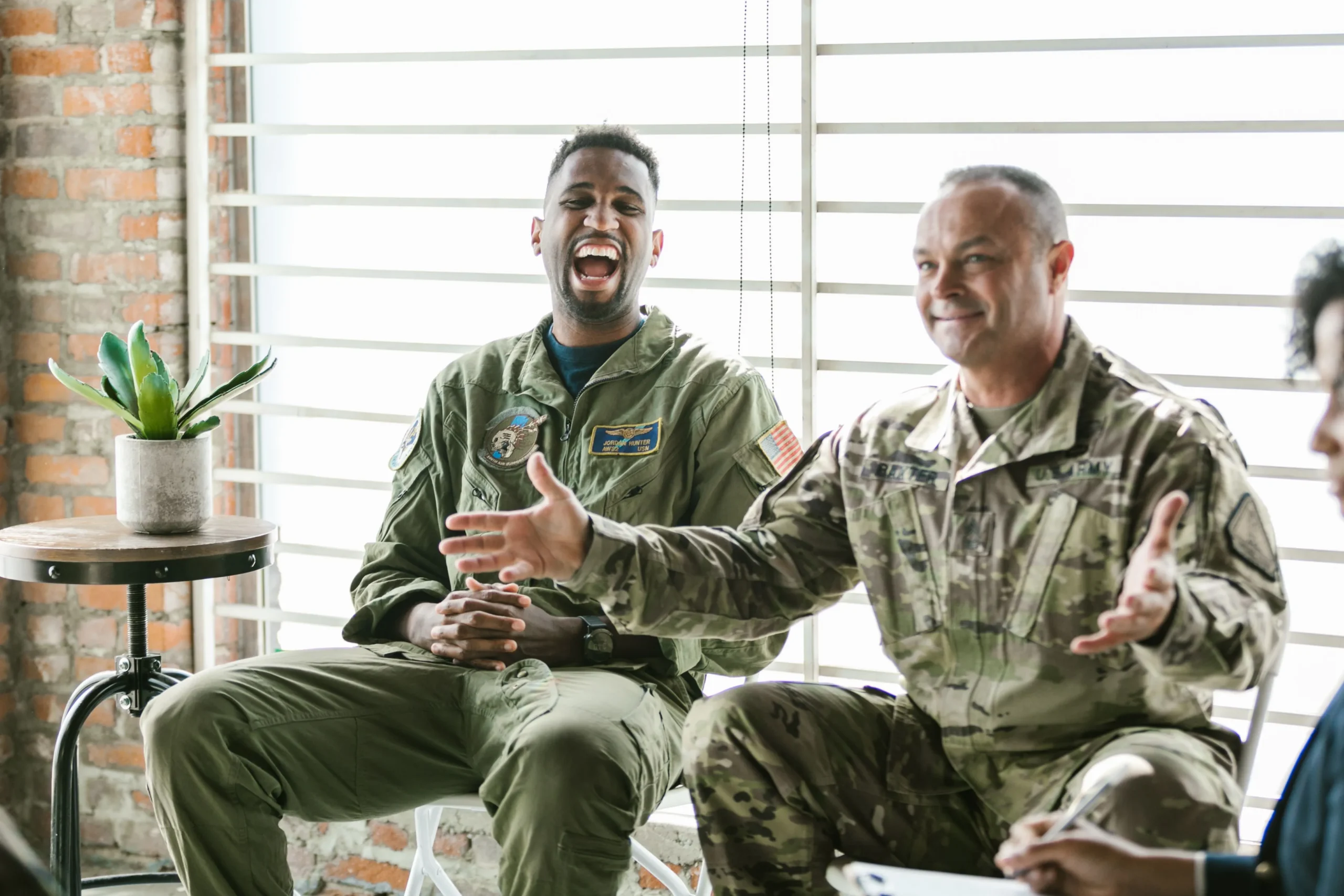
Effective treatment respects what a man has been through. It doesn’t shame him for his service or ask him to be someone he’s not. Instead, it builds on strengths he already has, such as discipline, loyalty, and grit.
Why Does a Men-Only Setting Matter?
In a men-only rehab, guys often open up faster. Without the pressure to perform, they can talk honestly about fear, guilt, anger, and loss. Furthermore, a group of men working toward the same goal can rebuild the brotherhood many veterans miss. Researchers have also found that support from trusted people in their lives can encourage male veterans to seek care.
What Therapies Address Both Addiction and Trauma?
Because addiction and PTSD so often appear together, integrated care is essential. Dual diagnosis treatment addresses substance use and mental health at the same time rather than one after the other. In addition, trauma-informed therapy helps men process painful experiences safely, at a pace that feels manageable. When appropriate, medication management can also support recovery from cravings, depression, or anxiety.
How Can Experiential Therapy Speak a Veteran’s Language?
Many male veterans would rather do something than sit and talk about feelings. That’s where experiential therapy comes in. Hiking, fishing, biking, and equine therapy give men a chance to work through emotions in action, much like they once did as part of a team. As a result, breakthroughs often come more naturally on a trail than on a couch.
You May Also Enjoy: 5 Vital Ways Equine-Assisted Therapy Helps Men Process Trauma
Where Can Male Veterans Find Addiction Treatment in Utah?
Spirit Mountain Recovery is a men’s addiction and mental health treatment center in Eden, Utah, set in the Wasatch Mountains of Ogden Valley. Our men’s residential treatment program offers a quiet, home-like setting about 30 minutes east of Ogden and roughly an hour north of Salt Lake City. Then, for men who need continued support after residential care, our intensive outpatient program in Roy, Utah provides structured treatment close to Hill Air Force Base.
We proudly serve men from Eden, Huntsville, Ogden, Roy, Layton, Salt Lake City, and communities across Northern Utah. In addition, we welcome male veterans from across the country who want to heal away from old triggers and familiar routines.
Here is what our program offers men who have served:
- Men-only residential care, with one staff member for every two clients.
- Integrated dual diagnosis care for PTSD, depression, anxiety, and substance use.
- Evidence-based, trauma-informed therapy paired with outdoor experiential activities in the Utah mountains.
- A clinical team that includes a psychiatric nurse practitioner with experience caring for U.S. veterans.
- A family therapy program that helps rebuild trust at home.
- In-network coverage with TRICARE, plus help to verify your insurance before admission.
- Care accredited by The Joint Commission.
Ultimately, our goal is simple: to help you trade survival mode for a life you actually want to live.
Frequently Asked Questions About Male Veterans and Addiction
Does military service cause addiction?
No, military service does not directly cause addiction. However, factors common in military life, including heavy drinking norms, combat trauma, injuries, and stigma around help-seeking, can raise the risk significantly.
Why is alcohol the most common problem for male veterans?
Alcohol is legal, easy to get, and deeply woven into military social life. Therefore, many men carry their drinking habits into civilian life. In fact, NIDA reports that alcohol use disorders are the most common type of substance use disorder among military personnel.
Can PTSD and addiction be treated at the same time?
Yes. Integrated dual diagnosis treatment is generally the most effective approach, because untreated PTSD often drives relapse, and continued substance use can worsen PTSD symptoms.
Does TRICARE cover rehab for male veterans?
TRICARE may cover residential treatment, intensive outpatient programs, and other levels of addiction care, depending on your plan and any prior authorization rules. Keep in mind that TRICARE generally covers military retirees, Guard and Reserve members, and their families, rather than every veteran. Spirit Mountain Recovery is in-network with TRICARE, and our admissions team can help you review your benefits.
Is a men-only rehab better for male veterans?
Many men find it easier to be honest, vulnerable, and accountable in a men-only setting. Moreover, working alongside other men can rebuild the sense of brotherhood that often fades after service.
What should I do if my husband, son, or father is a veteran in crisis?
If he is in immediate danger, call 911 right away. Otherwise, the Veterans Crisis Line is available 24/7 by dialing 988 and then pressing 1.
Take the First Step Toward Recovery
You served with courage, and you deserve care that honors that service without judgment. Contact Spirit Mountain Recovery today to learn how our men’s treatment program in Eden, Utah, can help you build a stronger life in recovery.