A lot of men carry trauma they’ve never talked about. Some of it comes from one big event, like combat, an accident, or an assault. Some of it builds slowly, through years of growing up in a volatile home, being told to “man up,” or learning that feelings weren’t safe to show.
Many of these men have tried traditional talk therapy. Some found it helpful. Others found themselves sitting across from a therapist, saying “I’m fine,” and leaving without ever touching the real stuff.
That’s one reason equine-assisted therapy has become a meaningful part of trauma and addiction treatment for men. Working with horses offers a different way in. Instead of relying only on words, men get to experience trust, calm, and connection in real time.
At Spirit Mountain Recovery, equine-assisted psychotherapy is part of our program for adult men in Eden, Utah. Here are five vital ways it can help men process trauma.
Why Trauma and Addiction Are So Closely Linked
Before looking at how equine therapy helps, it’s important to understand the connection between trauma and substance use.
According to the National Center for PTSD at the U.S. Department of Veterans Affairs, over 4 out of 10 adults with PTSD also have problems with drug or alcohol use. The VA explains that people may use substances to try to cope with PTSD symptoms, relax, feel more comfortable in social settings, or deal with thoughts and feelings they’d rather avoid.
For men, trauma often shows up sideways: as anger, isolation, overwork, or drinking that started as relief and turned into a trap. We explore this more in our article on how trauma shows up as addiction in men.
The good news is that the VA also notes PTSD and substance use can be treated at the same time. Equine therapy is one tool that can support that work alongside evidence-based clinical care.
What Is Equine-Assisted Therapy?
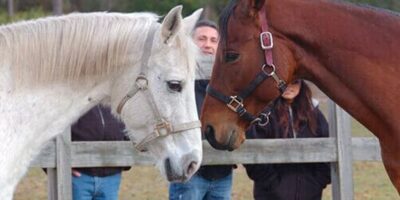
Equine-assisted therapy is a form of experiential therapy that involves structured interactions with horses, guided by trained mental health professionals. Sessions usually happen on the ground, not in the saddle. Clients might groom, lead, or simply observe a horse while a therapist watches their behavior, emotional reactions, and thought patterns.
At Spirit Mountain, our equine therapy in Utah is led by EAGALA-certified therapists with LCSW credentials. It’s one part of a larger treatment plan, not a replacement for clinical care.
1. Horses Respond to What You Feel, Not What You Say
Horses are prey animals. They’re highly tuned to body language, tension, and energy in the people around them.
That matters for men who have spent years hiding what’s going on inside. You can tell a therapist you’re calm. But if your shoulders are tight, your jaw is clenched, and your movements are sharp, a horse may react to that tension anyway.
This kind of immediate, honest feedback can be powerful. It helps men notice what their body is doing before their mind catches up. Over time, that awareness becomes a skill they can use outside the arena, like recognizing the early signs of anger, anxiety, or a craving.
2. It Builds Emotional Regulation in Real Time
Trauma keeps the nervous system on high alert. The National Center for PTSD explains that people with PTSD may often feel on edge, keyed up, or irritable, and may be easily provoked.
Working with a horse gives men a chance to practice calming that response. To approach an animal that can weigh around 1,000 pounds, you have to slow down, breathe, and settle yourself. If you rush in with frustration, the horse may move away. When you steady yourself, the horse is more likely to stay close.
That’s emotional regulation, learned through experience rather than just explained in a session.
Research on equine therapy in addiction treatment supports this. A 2023 randomized controlled trial published in BMC Complementary Medicine and Therapies studied 100 adults with substance use disorders and found that the group receiving equine-assisted therapy showed significant improvements in emotion regulation, self-efficacy, and perceived self-esteem compared with the control group.
3. It Rebuilds Trust Without Forcing Words
For many men with trauma, trust was broken early. People who were supposed to be safe weren’t. Opening up can feel risky, even in a therapy room.
Horses don’t judge your past. They don’t care about your job title, your mistakes, or your record. Building a working relationship with a horse requires consistency, patience, and respect, and it gives men a low-pressure way to experience trust again.
Because the focus is on the horse, many men find it easier to talk. Conversations happen side by side, not face to face. Insights often come up naturally during the activity, and the therapist can help connect them to patterns in relationships, family, and recovery.
4. It Helps Men Face Fear and Build Confidence
Standing next to a large animal can bring up real fear. For men who have spent their lives avoiding vulnerability, that’s an opportunity.
In a safe, guided setting, men can notice fear, stay present with it, and work through it. Successfully leading or connecting with a horse is a small, earned win. Those wins add up and can help rebuild confidence that addiction and trauma have worn down.
Research with veterans points in a promising direction. In an open trial reported by Columbia University’s Department of Psychiatry, 63 veterans with PTSD took part in eight weekly 90-minute equine-assisted therapy sessions, and more than half showed a marked reduction in PTSD and depression symptoms after treatment and at a three-month follow-up. Because this was an open trial, more controlled research is still needed, but the results are encouraging.
5. It Complements Trauma-Focused Clinical Care
Equine therapy works best as part of a larger plan. At Spirit Mountain Recovery, it supports the clinical work men do in individual and group therapy.
Our clients receive two hours of individual therapy and 20 hours of clinical group work each week. Our trauma-informed therapy approach recognizes how trauma affects behavior, relationships, and substance use. We also offer modalities like CBT, DBT, and EMDR therapy, which helps people process traumatic memories.
Equine sessions can bring emotions to the surface in a way that makes this clinical work more productive. What a man notices in the arena becomes something he can explore in therapy.
What to Expect in an Equine Therapy Session

Every session is different, but men can generally expect:
- Ground-based activities like grooming, leading, or observing a horse
- A trained therapist guiding the session and noticing patterns
- Time to reflect on what came up and how it connects to daily life
- No prior horse experience required
Safety is always a priority, and sessions are designed to meet each man where he is.
Heal Trauma and Addiction at Spirit Mountain Recovery
Trauma doesn’t have to control the rest of your life. With the right combination of clinical care and experiential therapy, men can learn to process the past and build a steadier future.
Spirit Mountain Recovery is a purposefully small, 10-bed residential program for adult men in the mountains of northern Utah. If you’re ready to explore how equine-assisted therapy and trauma-informed care can help, reach out to our admissions team for a private conversation.
FAQs
Is equine therapy evidence-based?
Research is growing. A 2023 randomized controlled trial found improvements in emotion regulation and self-esteem among adults with substance use disorders, and an open trial with veterans found reductions in PTSD symptoms. More controlled studies are still needed.
Do I need to know how to ride a horse?
No. Most equine-assisted psychotherapy happens on the ground, with activities like grooming and leading.
Can equine therapy replace talk therapy for trauma?
No. Equine therapy is a complement to clinical treatment like individual therapy, group therapy, and EMDR, not a replacement.
Why does equine therapy work well for men?
Many men connect better through action and side-by-side activity than through face-to-face conversation, which can make it easier to open up.